Preventing cardiovascular risk before it starts: France’s new roadmap echoes a decade of research at PARCC
3 November 2026

Team Leader: Ivana Zlatanova
Team Leader: Maria-Christina Zennaro
Team Leaders: Fabien Hyafil, Bertrand Tavitian
Team Leader: Alexandre Loupy
Team Leaders: Eric Tartour, Magali Terme-Zydel
Team Leaders: Pierre-Louis Tharaux, Olivia Lenoir
Team Leader: David Smadja
Team Leaders: Jean-Sébastien Silvestre, Jean-Sébastien Hulot
Team Leaders: Hafid Ait-Oufella, Ziad Mallat
Team Leaders: Jean-Philippe Empana, Xavier Jouven
Team Leader: Nabila Bouatia-Naji
Team Leader: Clément Cochain
Team Leaders: Anne Eichmann, Eric Camerer
Recent discoveries from PARCC teams
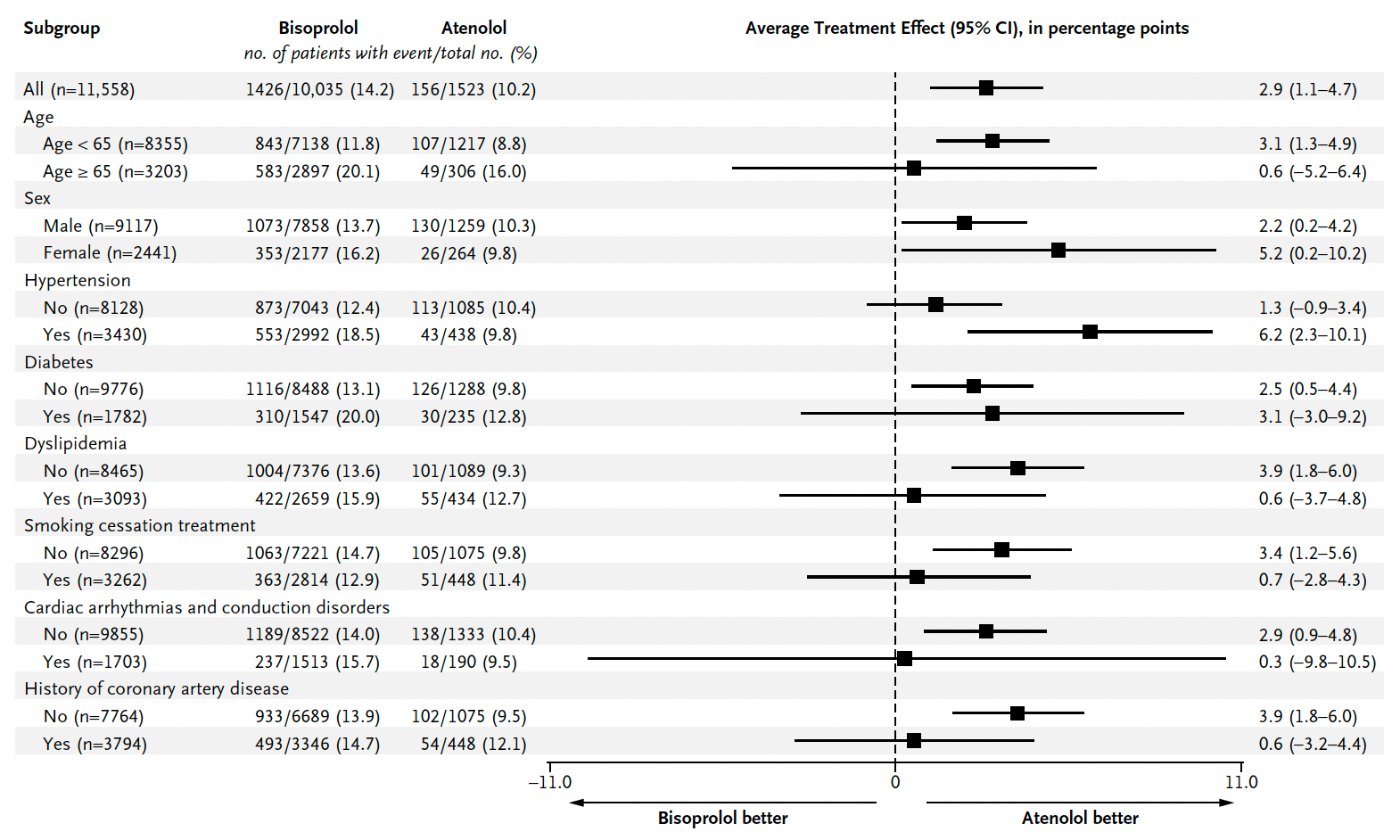
Using French national health data on 11,558 patients treated in the Paris area after a myocardial infarction and with no sign of heart failure, the team compared the two most prescribed beta-blockers. Starting atenolol was associated with fewer major cardiovascular events at two years than bisoprolol, without a significant difference in overall mortality.
Subgroup analysis from Laurenceau et al., NEJM Evidence 2026 — © Massachusetts Medical Society.
Read the article →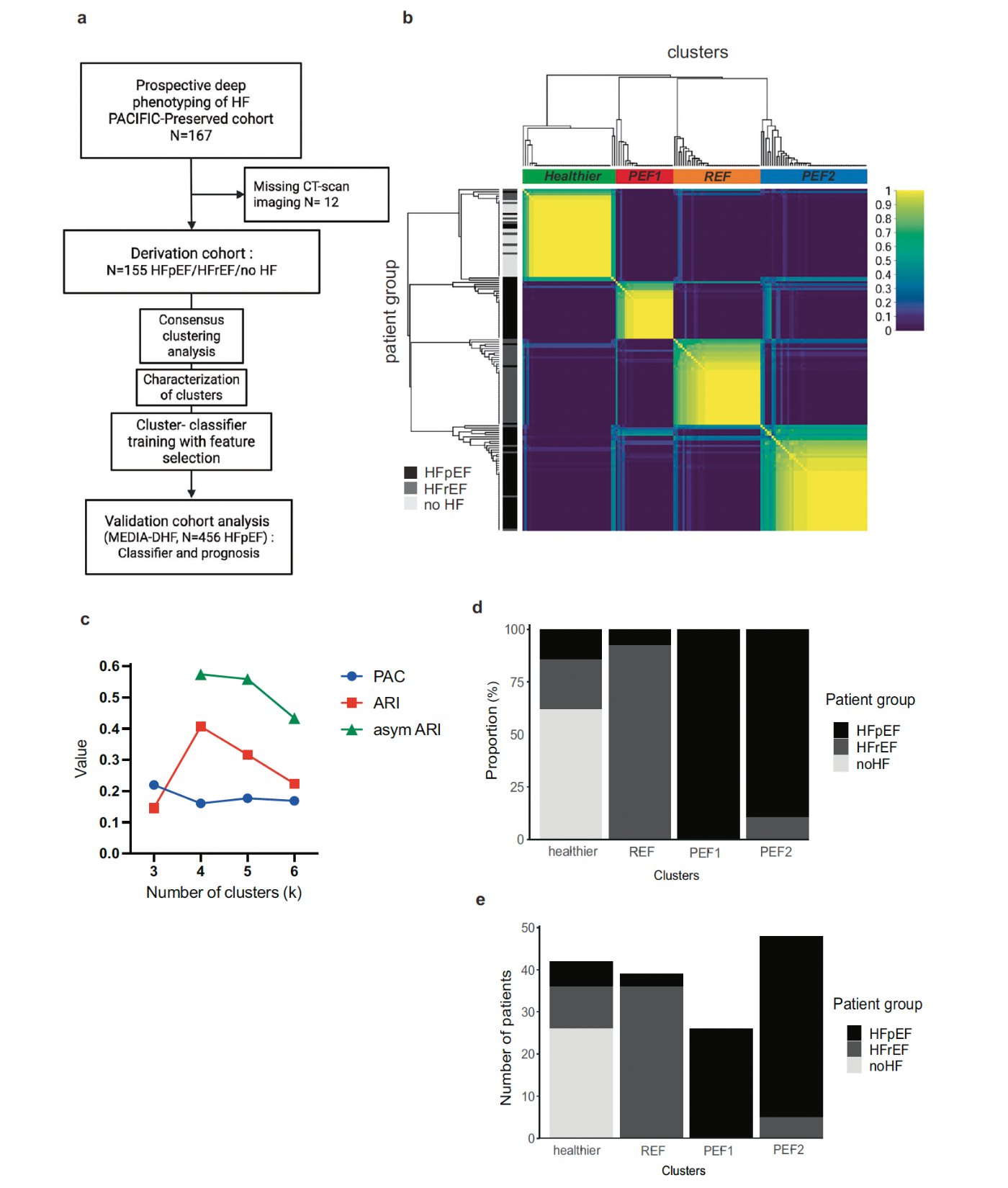
In the PACIFIC-Preserved cohort, combining clinical data, cardiac imaging and high-throughput plasma proteomics with machine learning split patients with HFpEF into two biologically distinct groups. The inflammatory group, marked by cardio-skeletal injury and renal dysfunction, carried a higher risk of adverse outcomes in an external validation cohort.
Fig. 1 from Hulot et al., Nat Commun 2026 — CC BY-NC-ND 4.0.
Read the article →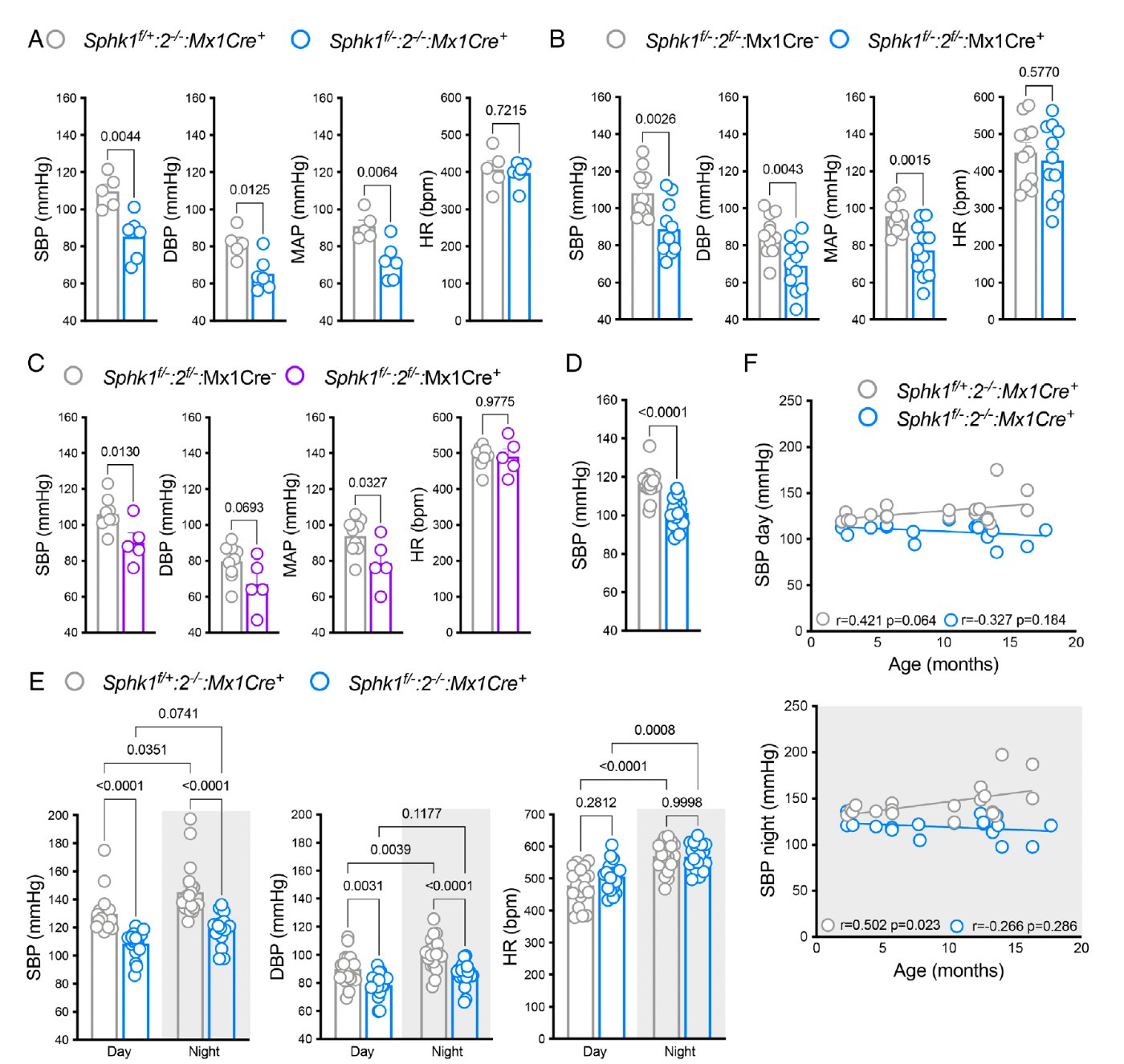
Sphingosine 1-phosphate (S1P), a lipid released by red blood cells, circulates bound to HDL or albumin. Mice lacking all circulating S1P had low blood pressure and weaker heart contraction, both corrected by transfusing S1P-producing red cells. Albumin-bound S1P increased vascular resistance through the S1PR3 and S1PR2 receptors.
Fig. 1 from Del Gaudio et al., PNAS 2026 — CC BY-NC-ND 4.0.
Read the article →So you don't miss any of our news.
